House Washing in Lakeland
House washing is the right starting point when stucco, siding, soffits, trim, gutters, and entry areas have algae, mildew, dust, pollen, or spider webs.
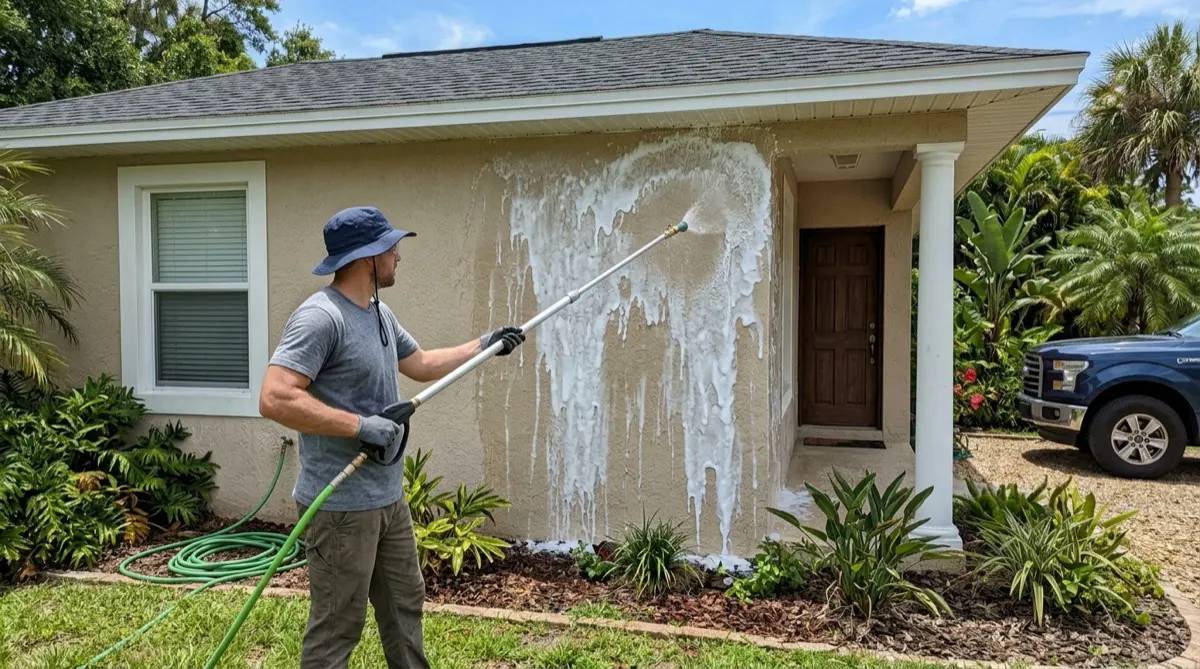
Pressure washing and soft washing in Lakeland
Need algae, mildew, roof streaks, driveway grime, paver stains, or pool-deck buildup cleaned without damaging the surface? Start with a callback that sorts out the material, stain, water access, plants, timing, and safest cleaning method.
We're a local call-connection service - the provider who takes your job will confirm service details, availability, cost factors, and credentials before booking.
Share the surface, stain, ZIP code, water access, photos, and any deadline. Pressure washing in Lakeland is not only about force. Stucco, tile roofs, screen enclosures, pavers, wood, vinyl fencing, painted trim, and concrete all need different handling. The provider who accepts the job should confirm the method and scope before booking.
Central Florida humidity makes exterior surfaces dirty in a particular way. Algae grows on shaded stucco, mildew returns on screened lanais, black streaks form on roof slopes, and driveways can turn slick after rainy weeks. Irrigation overspray can leave orange marks on concrete, curbs, vinyl fencing, and pavers. Oak leaves, pollen, lake-area shade, and afternoon storms all add to the cycle.
That does not mean every surface should be blasted. High pressure can scar wood, etch concrete, force water behind siding, damage screens, loosen paint, or break fragile roof tile. The better first question is what surface you have and what stain you are trying to remove. Concrete may need a surface cleaner. Roofs and many walls may need soft washing. Rust or irrigation staining may need a specialty treatment. Pavers may need care around joints and sealer.
We're a local call-connection service - the provider who takes your job will confirm service details, availability, cost factors, and credentials before booking.
House washing is the right starting point when stucco, siding, soffits, trim, gutters, and entry areas have algae, mildew, dust, pollen, or spider webs.
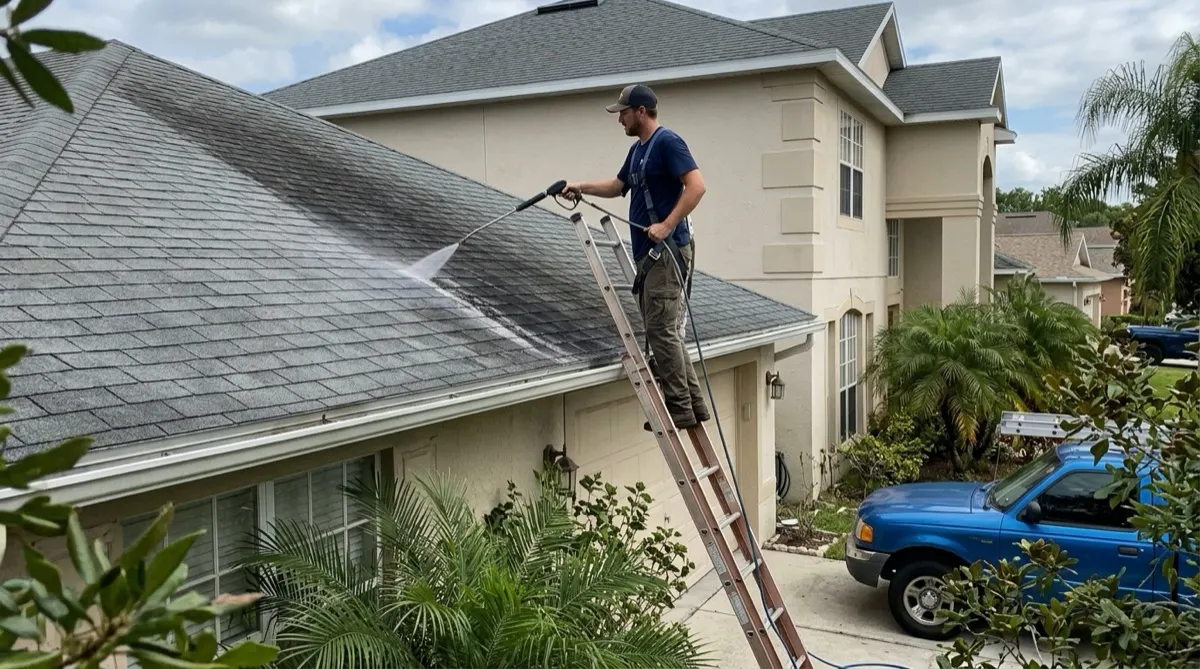
Roof cleaning should focus on soft washing, plant protection, controlled runoff, and roof material safety rather than blasting shingles or tile with high pressure.
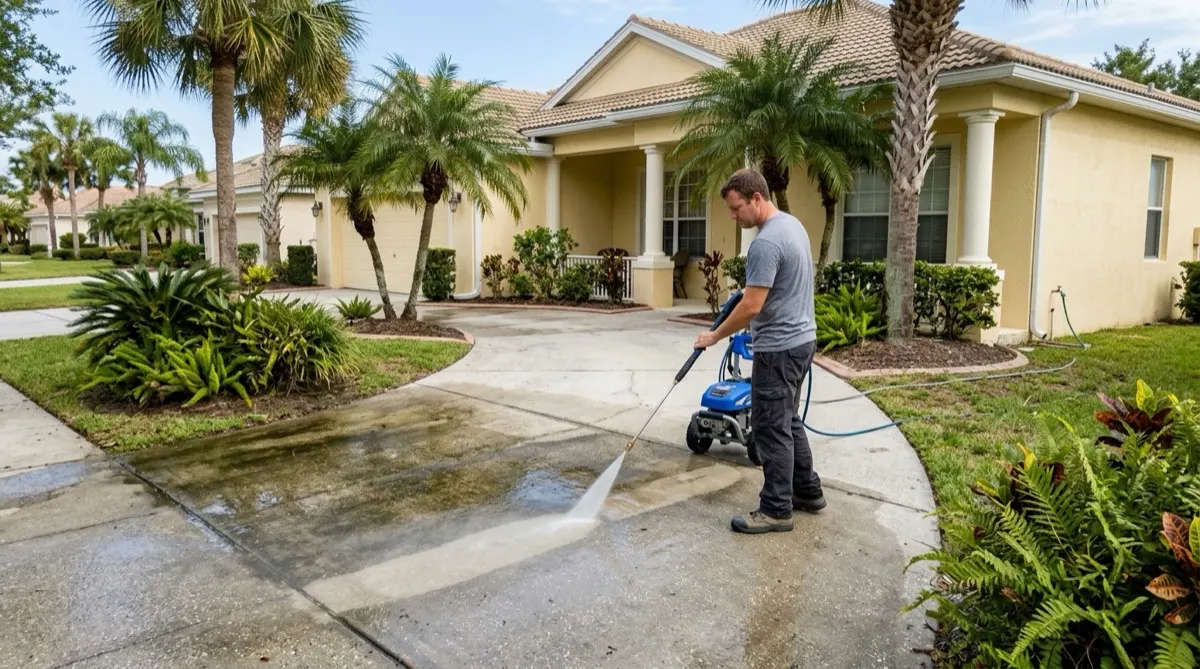
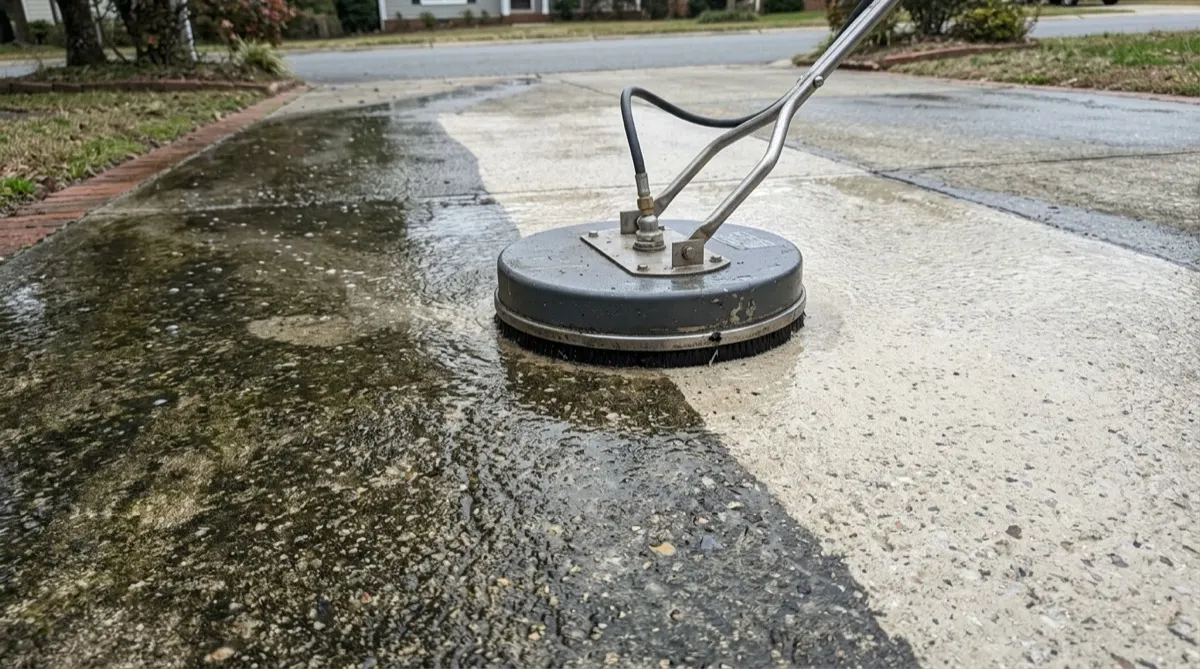
Driveway and concrete cleaning helps remove dark algae, tire marks, leaf stains, mildew, dirt, and slippery buildup from hard surfaces around the home.
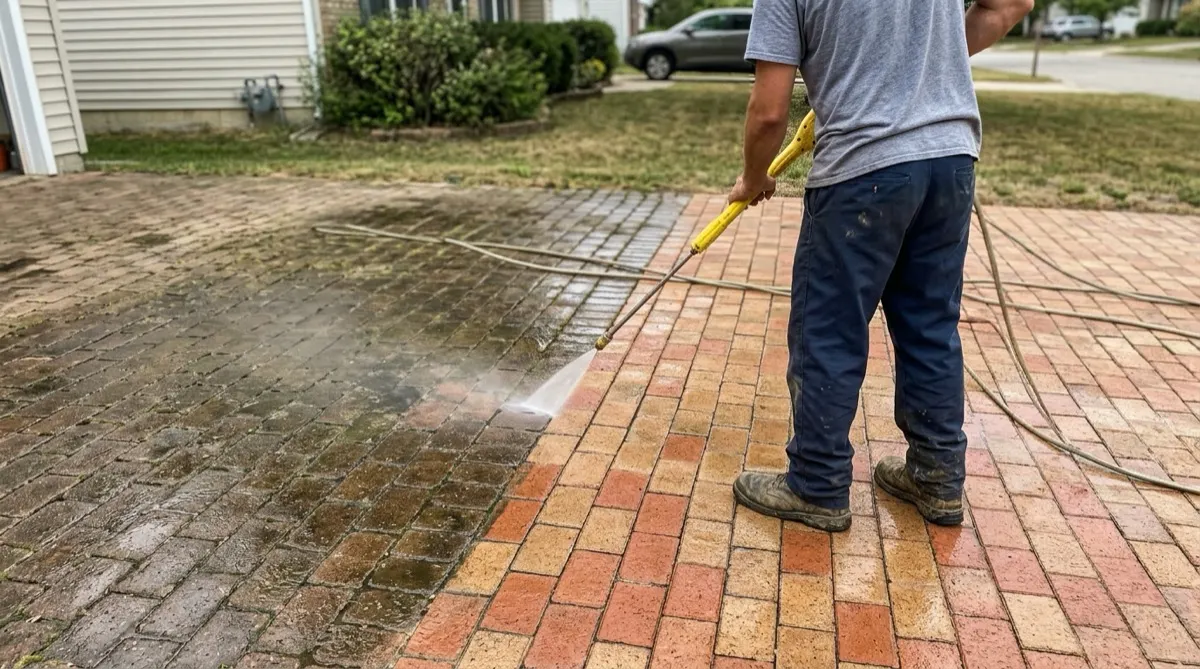
Paver cleaning can restore patios, walkways, and driveways while protecting sand joints, edges, sealers, and nearby landscape beds.
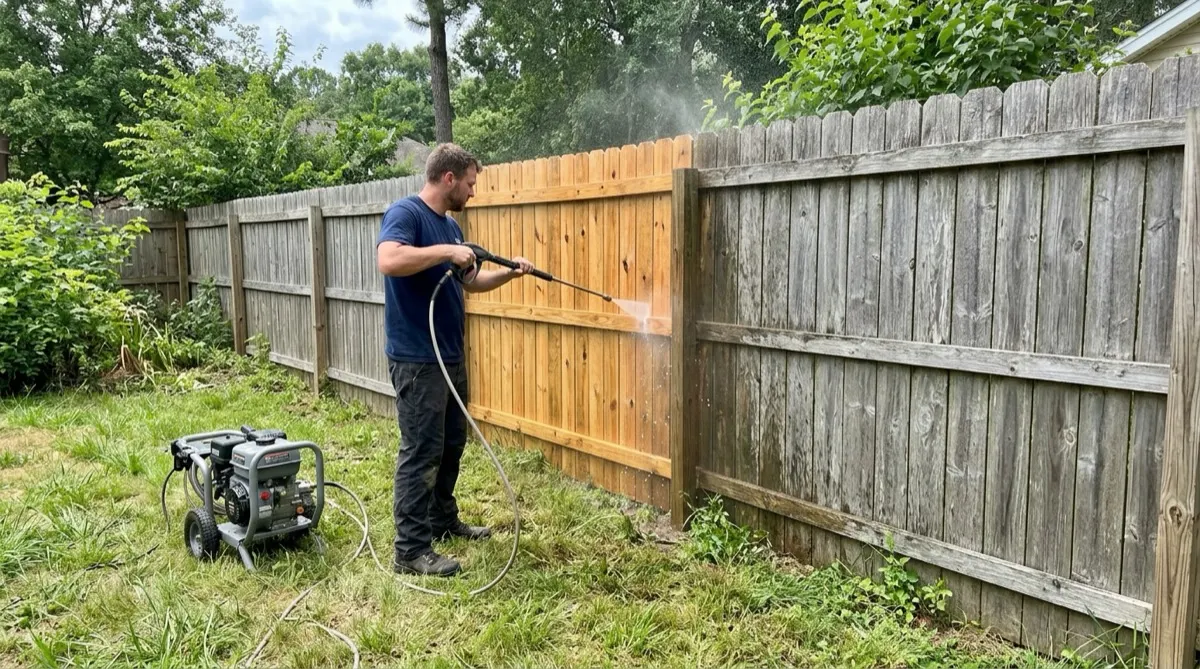
Deck and fence washing needs enough cleaning power to remove mildew and gray film without shredding wood grain or forcing water behind panels.
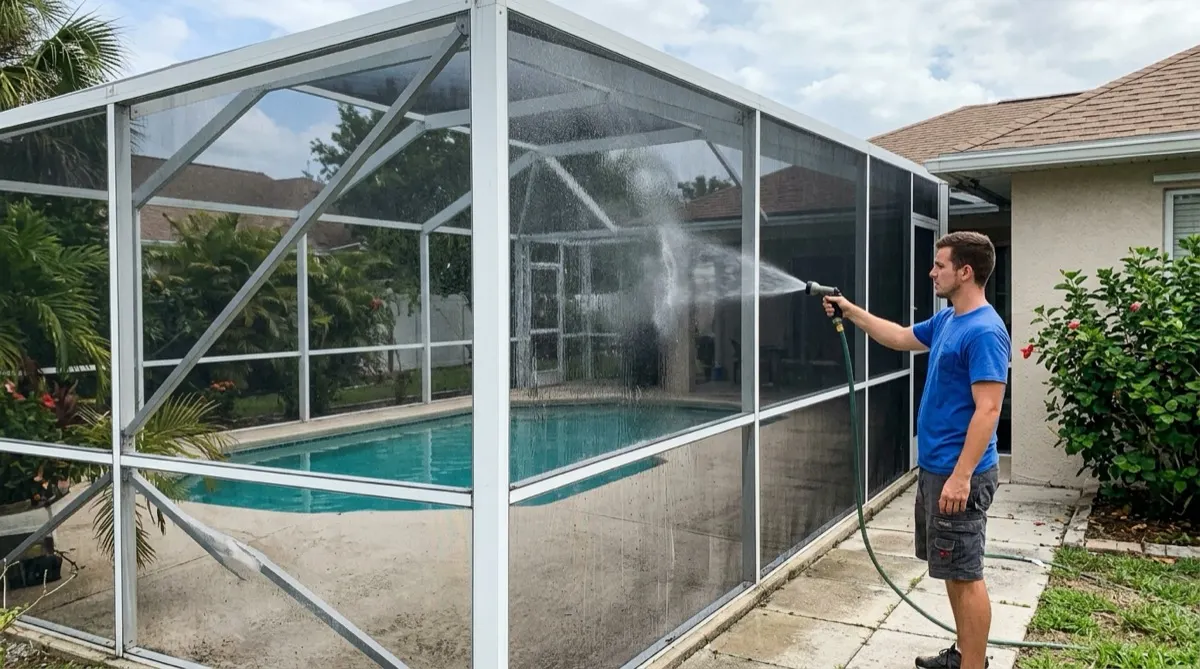
Screen enclosure and pool deck cleaning helps with algae, dust, cobwebs, slippery patio surfaces, cage frames, and buildup around lanais.
Before you call, take a wide photo of each surface, a close photo of the worst stain, and one access photo showing the gate, driveway, roofline, hose bib, pool cage, or furniture in the way. Mention whether the surface is painted, sealed, cracked, slippery, or fragile. If there are plants under the work area, say so. If water has leaked around windows before, say that too.
The provider can usually ask better questions when you describe the real situation: tile roof with black streaks, two-car concrete driveway with tire marks, paver patio with irrigation stains, pool screen enclosure with algae on the frame, or a one-story stucco house with mildew under the eaves. Clear scope protects both you and the provider.
Weather matters. Summer storms can interrupt roof cleaning and ladder work. Lightning can stop exterior cleaning even when the surface itself is ready. Wind can affect soft-wash drift and plant protection. Heavy rain can change runoff around driveways, patios, and pool decks. If your job is tied to listing photos, guests, an HOA notice, or a move-in, give the provider the real deadline and ask what weather window is safest.
Access also matters. Locked gates, vehicles in the driveway, furniture on the lanai, fragile screens, pets outside, blocked hose bibs, or tenants who were not warned can slow a simple job. If you are calling for a rental home, duplex, HOA walkway, storefront entry, or shared exterior area, explain who can approve the work and when the area can be accessed.
A practical pressure washing plan should name the surfaces, cleaning method, protection steps, and realistic expectations. It should also separate ordinary algae from tougher stains. Oil, rust, irrigation minerals, oxidation, old sealer, battery acid, fertilizer burns, and etched concrete may not respond to normal washing. Some stains improve but do not fully disappear. Asking about that up front is better than assuming every stain is just dirt.
For roof cleaning, ask about soft washing, plant rinsing, runoff, roof walking, tile condition, and whether gutters or downspouts change the plan. For house washing, ask about window seals, outlets, cameras, door thresholds, and painted surfaces. For concrete, ask whether a surface cleaner will be used and whether rust or oil needs a separate treatment. For pavers, ask about joint sand and sealer condition.
Call (863) 555-0107 or request a callback with your ZIP code, surface list, photos, and timing.
We're a local call-connection service - the provider who takes your job will confirm service details, availability, cost factors, and credentials before booking. No storefront address, reviews, ratings, license numbers, or provider credentials are claimed here. Verify provider details before booking.
Most roofs should not be cleaned with direct high pressure. Ask about a roof-safe soft-wash approach, plant protection, runoff, roof material, and whether any damaged tiles or shingles need caution.
Yes. List every surface during the callback so the provider can plan method, time, water use, equipment, and protection steps before confirming the job.