Pressure washing guide
Paver Cleaning and Sealing Questions to Ask
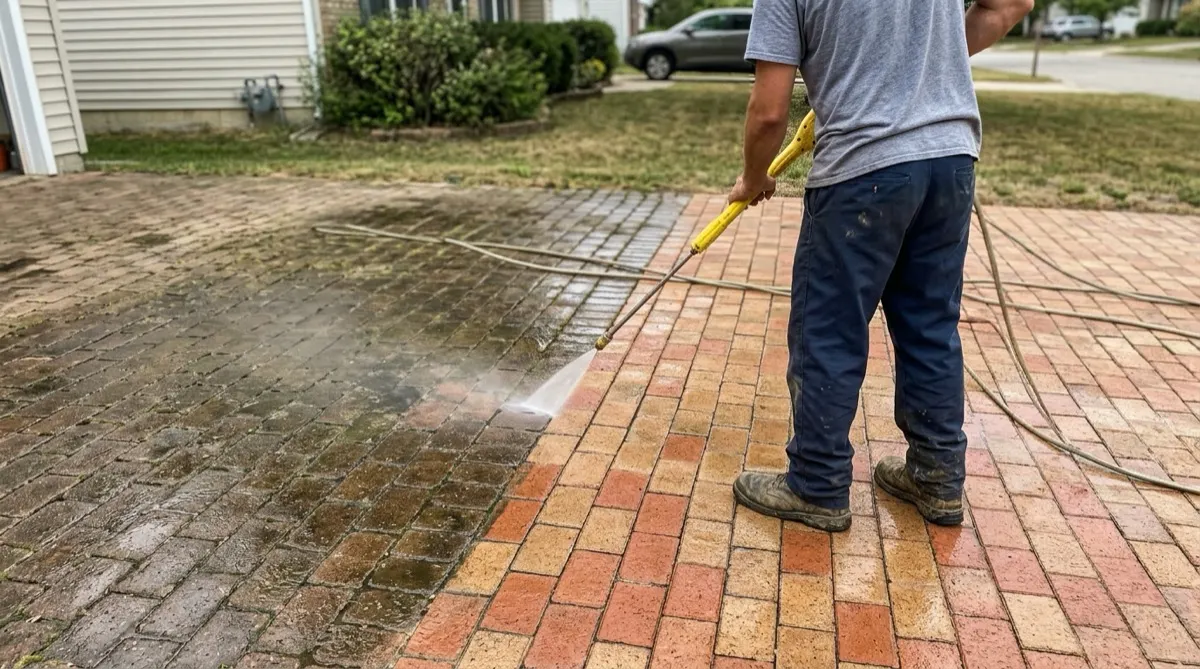
Pavers can look dramatically better after cleaning, but joint sand, sealer condition, drainage, edge restraint, and stain type should be discussed before work starts.
The short answer
Pavers can look dramatically better after cleaning, but joint sand, sealer condition, drainage, edge restraint, and stain type should be discussed before work starts. In Lakeland, the best answer usually depends on material, shade, algae level, roof or ladder access, water availability, and whether the surface has rust, oil, oxidation, old sealer, cracked joints, or failing paint.
What changes the recommendation
Exterior cleaning is not one job repeated on every surface. A driveway with algae and tire marks needs a different method than a tile roof with black streaks, a painted stucco wall near landscaping, or a pool deck inside a screen enclosure. Tell the provider what the surface is made of, what stain bothers you most, how long it has been there, and whether it has been sealed or painted recently.
Photos help because stains can look similar from a distance. One wide photo shows the whole work area, one close photo shows the stain, and one access photo shows the gate, driveway, hose bib, roofline, pool cage, or furniture that may affect setup. If you are not sure whether a stain is rust, algae, oil, irrigation mineral, or oxidation, say that directly.
Questions to ask before booking
- What cleaning method is planned for this surface?
- How will plants, pool water, screens, outlets, cameras, and door thresholds be protected?
- What stains may need specialty treatment or may not fully disappear?
- Will furniture, vehicles, planters, mats, and grills need to be moved before arrival?
- Could rain, lightning, roof pitch, or water access change the schedule?
What Lakeland homeowners should watch for
Humid weather, lake-area shade, oak leaves, pollen, irrigation overspray, and fast-growing algae all shape exterior cleaning around Lakeland. A north-facing wall can turn green while the front elevation still looks clean. A driveway under trees can become slick after rainy weeks. A roof slope that stays shaded can show streaks before the rest of the roof. Pavers near sprinklers may show orange edges even when the patio surface is otherwise clean.
These details matter because pressure alone does not solve every problem. Some stains require dwell time. Some surfaces need lower pressure. Some work is best scheduled when storms are less likely. The provider who accepts the job should explain what looks straightforward, what needs caution, and what result is realistic for the surface.
How to describe the job clearly
When you call, start with the area, not the square footage guess. Say, for example, that you need a one-story stucco home washed, a two-car driveway cleaned, a screened lanai and pool deck rinsed, or a tile roof soft washed. Then mention the worst stain, the surface material, whether there are plants or pool equipment nearby, and whether the job is tied to an HOA notice, listing photos, visitors, or a safety concern.
Clear details help the provider ask useful follow-up questions. They also reduce surprises on arrival, especially when gates are locked, water spigots are broken, screens are torn, outdoor outlets are exposed, roof tiles are brittle, or furniture covers the work area.
When to slow down and ask for a test spot
Ask about a test spot when the surface is painted, sealed, old, stained by irrigation, marked by rust, affected by oxidation, or already showing cracks and loose coating. A small test area can reveal whether the stain is surface buildup or a deeper mark that may need a different treatment. It also gives you a chance to confirm whether the expected result is a full cleanup, a visible improvement, or a safer maintenance wash that avoids damage.
Related services
House washingRoof cleaningDriveway and concretePaver cleaningDeck and fence washingScreen and pool deckStorefront and large-propertyRust stain removalHelpful questions
Do I need to know the exact stain type?
No. Give the best description you can and send clear photos. The provider should help identify whether it looks like algae, mildew, rust, oil, oxidation, tannin, or irrigation staining.
Can pressure washing be done after rain?
Sometimes. Wet surfaces are not always a problem, but lightning, heavy runoff, roof access, wind, and plant protection can change the plan.